
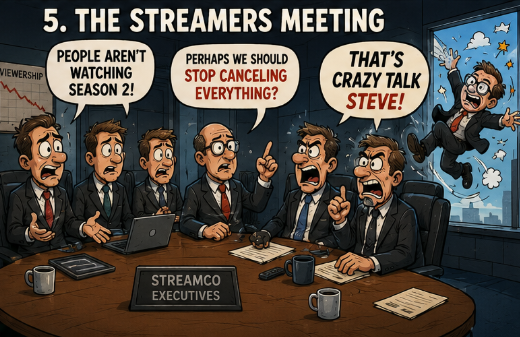
Streaming services are facing an increasingly common problem: viewers aren’t returning for Season 2. From canceled TV shows to declining viewership numbers, many streaming platforms are struggling to retain audiences after the first season of their biggest hits. In some cases, viewership can decline by more than 70% between seasons.
It’s a growing problem, and while streaming services are certainly paying attention to the numbers, they may not be paying enough attention to the reasons behind them.
We’ve all done it. We watch a fantastic first season, tell ourselves we’ll watch Season 2 when we have time, and before we know it, eighteen months have passed and we’ve forgotten half of the plot. Other times, we don’t bother starting a new series at all because we’re convinced it’ll be canceled before the story has a chance to go anywhere.
So why is this happening? Why are viewers turning off instead of tuning in?
Let’s take a look at some of the biggest reasons.
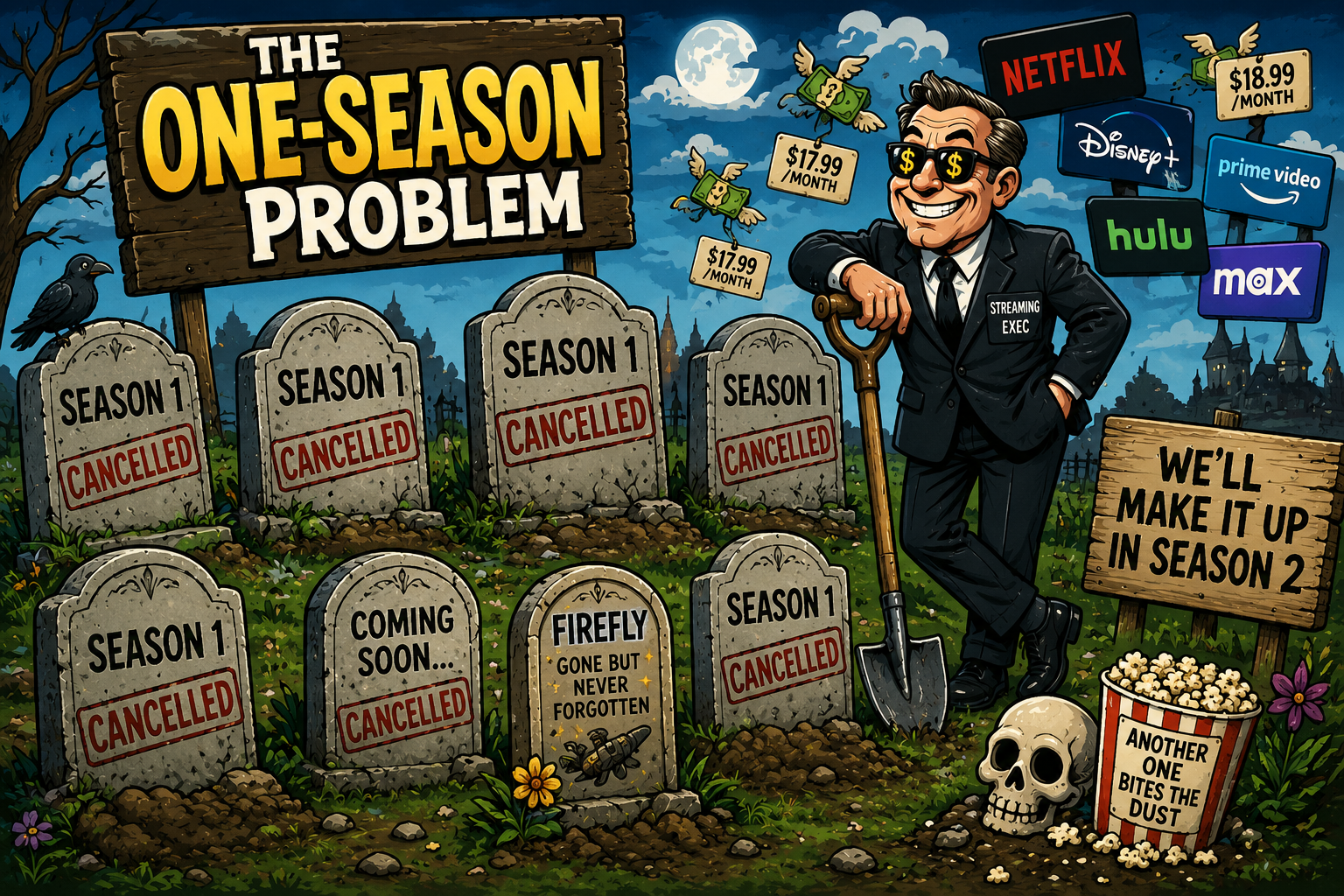
Why Streaming Services Cancel TV Shows Too Quickly
Some of the best TV series out there don’t find their footing until their second or even third season. During that first season, creators are discovering what’s working for audiences, what’s not, and refining plot lines to make a show more intriguing and better paced. Meanwhile, audiences are slowly becoming invested in the characters and their stories.
Unfortunately, many streaming services don’t seem willing to give shows that opportunity.
When a streamer cancels a series after its very first season, they’re doing themselves a huge disservice. Worse still, they’re teaching audiences not to become invested in new shows.
With the fear of cancellation hanging over every new release, fewer people are willing to commit to watching something they’ve never heard of before. With fewer people watching new shows, even fewer are willing to stick around and wait for additional seasons.
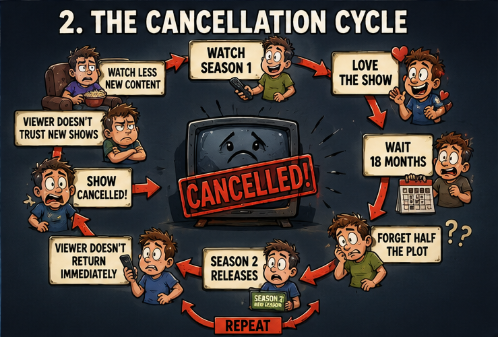
It’s becoming a vicious cycle.
If audiences expect cancellation, they’ll stop investing their time. If they stop investing their time, viewership numbers drop. Then streaming services use those lower numbers to justify canceling even more shows.
Everybody loses.
Rising Streaming Costs Are Driving Subscribers Away
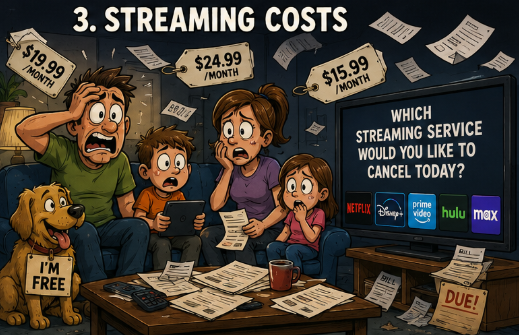
Every year we see increases in the cost of streaming services. Companies will often claim it’s so they can produce even more “quality” programming.
However, subscription prices are increasing, grocery prices are increasing, fuel prices are increasing, and wages aren’t always keeping pace with inflation. Something eventually has to give, and for many households that’s their entertainment budget.
Streaming services aren’t competing with cable anymore—they’re competing with one another.
If Service A costs less than Service B and offers equally compelling content, people will simply move their money elsewhere.
The problem becomes even more frustrating when streamers produce ten cheaply written shows instead of investing in one genuinely great series. Then prices increase while audiences are told it’s necessary because producing ten shows isn’t cheap.
I’m sure it isn’t.
But if they’re ten terrible shows, people aren’t going to want to pay for your streaming service.
Why Streaming TV Spin-Offs Can Hurt Viewership
When a streaming service develops a hit TV series, the next logical step is to maximize profitability. By building upon an existing IP, they can alternate production schedules by having one series filming while another is broadcasting and vice versa.
On paper, it’s a great idea.
However, to ensure viewership transfers from one series to another, streamers often introduce crossover episodes or create entirely new shows based upon a handful of characters from the original series. Plot lines can also become split across two or more shows.
Confused yet? Think about how audiences feel.
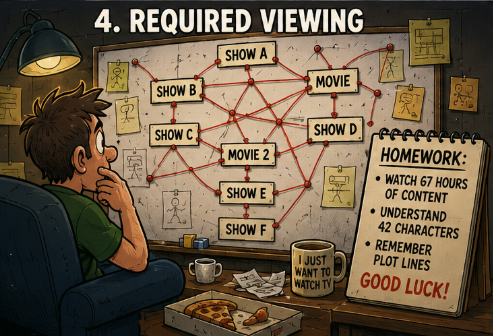
It’s one thing to commit to watching a single TV series. It’s something else entirely when viewers are expected to watch several shows simultaneously, keep track of dozens of characters, understand multiple plot lines, and somehow remember which storyline belongs to which series.
That’s a level of commitment many people simply don’t have time for.
Usually, a series will stand on its own two feet to begin with, but when Season 2 requires viewers to have watched an entirely different series to understand what’s happening, many people simply tune out.
There’s absolutely nothing wrong with expanding an IP or building an interesting world. Just don’t make it homework.
Why Viewers Don’t Watch Season 2 Immediately
This one should be basic knowledge by now, yet many streaming services don’t seem to be keeping it in mind.
Let’s say you become invested in a new streaming show. You watch the first season and absolutely love it. Then you’re told you’ll have to wait a year—or sometimes even two years—for the next season.
So what do you do?
You find something else to watch.
By the time Season 2 finally arrives, you’re already halfway through another series and tell yourself you’ll get back to it later.
And later eventually becomes six months.
Or a year.
The important thing to remember is that viewers haven’t necessarily abandoned the show—they’re simply watching on their own schedule.
Unlike traditional television, streaming services don’t require audiences to sit down at 8 PM every Thursday evening. That’s one of their biggest advantages, yet many companies still seem obsessed with measuring immediate viewership numbers rather than long-term engagement.
People may very well watch Season 2, but they’ll do so when it suits them—not necessarily when it suits the streamer.
So How Do Streaming Services Fix This Problem?
Some of the solutions are actually pretty simple.
1. Commit to at Least Three Seasons
This gives people an opportunity to discover a show, allows word of mouth to spread naturally, and gives viewers time to recommend it to others.
Very few TV shows become legendary after being canceled following a single season. For that to happen, they generally need to be exceptional (Firefly, we’re looking at you!).
Audiences are also far more willing to start watching something when they know it’s going to have time to tell its story.
2. Don’t Make Spin-Offs Required Viewing
World-building is fantastic. Expanding IPs is fantastic. Crossover episodes can be fantastic.
Making them mandatory? Not so much.
Don’t create six different TV shows where viewers must watch every series and movie simply to understand what’s happening. Not only will this put people off, but if the quality of one show drops significantly, it may discourage audiences from watching any of the others.
Every series should be able to stand on its own merits.
3. Keep Streaming Costs Under Control
People don’t mind paying for quality entertainment. What they don’t like is paying increasingly higher subscription prices while receiving increasingly mediocre programming in return.
Focus on producing fewer but better shows.
One exceptional series will generate significantly more goodwill than ten forgettable ones ever could.
4. Understand Modern Viewing Habits
There are plenty of shows I’ve taken a long break before returning to, not because I disliked them, but simply because I became invested in other series.
I have a timetable. I have certain times when I can sit back and enjoy streaming content. Eventually, I’ll get around to watching something I’ve missed, but I’m not going to rearrange my schedule to do so.
Streaming services should be planning for returning viewers over the long run, not simply chasing immediate viewing statistics.
Not everyone watches a new season during opening weekend, and that’s perfectly okay.
Final Thoughts
The fact is there are a lot of streaming services competing for our attention, and viewers’ tastes have changed considerably over the years. We’re no longer satisfied with twenty-two standalone episodes produced on a shoestring budget. People want better writing, stronger story arcs, and higher-quality productions.
Audiences can tell when a show has no idea where it’s going, no matter how intriguing the premise might be (Teacup, anyone?).
They can also tell when a streaming service isn’t willing to commit to its own content.
If you want viewers to tune back in for Season 2, then streaming services are going to have to show some patience and commitment themselves. Give stories time to grow. Respect modern viewing habits. Stop treating every new series as an overnight success or failure.
Most importantly, stop pulling the plug on the very shows you’re asking us to become invested in.
After all, if streaming services won’t commit to their own shows, why should audiences commit to watching them?
 English